





What Makes a Flywheel Training Device a Good Fit for the Weight Room?
Unlike traditional strength equipment, flywheel training devices utilize inertia-based resistance. A spinning disc is used to generate resistance that scales with the user’s given effort. The harder you push or pull during the concentric phase, the more resistance you face during the eccentric return.
For weight rooms, the addition of flywheel training devices delivers superior eccentric loading, power development, change of direction, and rehabilitation support in a fraction of the space required by multiple traditional machines.
That versatility becomes especially valuable in busy training environments. When floor space is limited and multiple users need access to quality training options, efficient equipment layout directly affects how well the room functions.
Why Are Weight Rooms Prioritizing Versatile, Space-Saving Equipment?
Weight rooms now need to support more users, more movement variety, and more specialized training within the same footprint. Traditional equipment layouts can quickly consume available space and serve only one or two training applications.
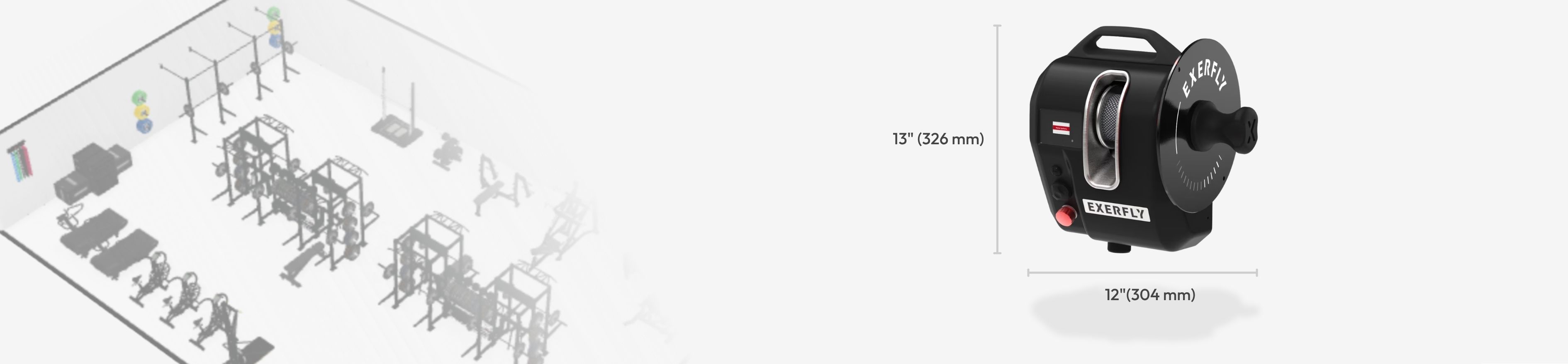
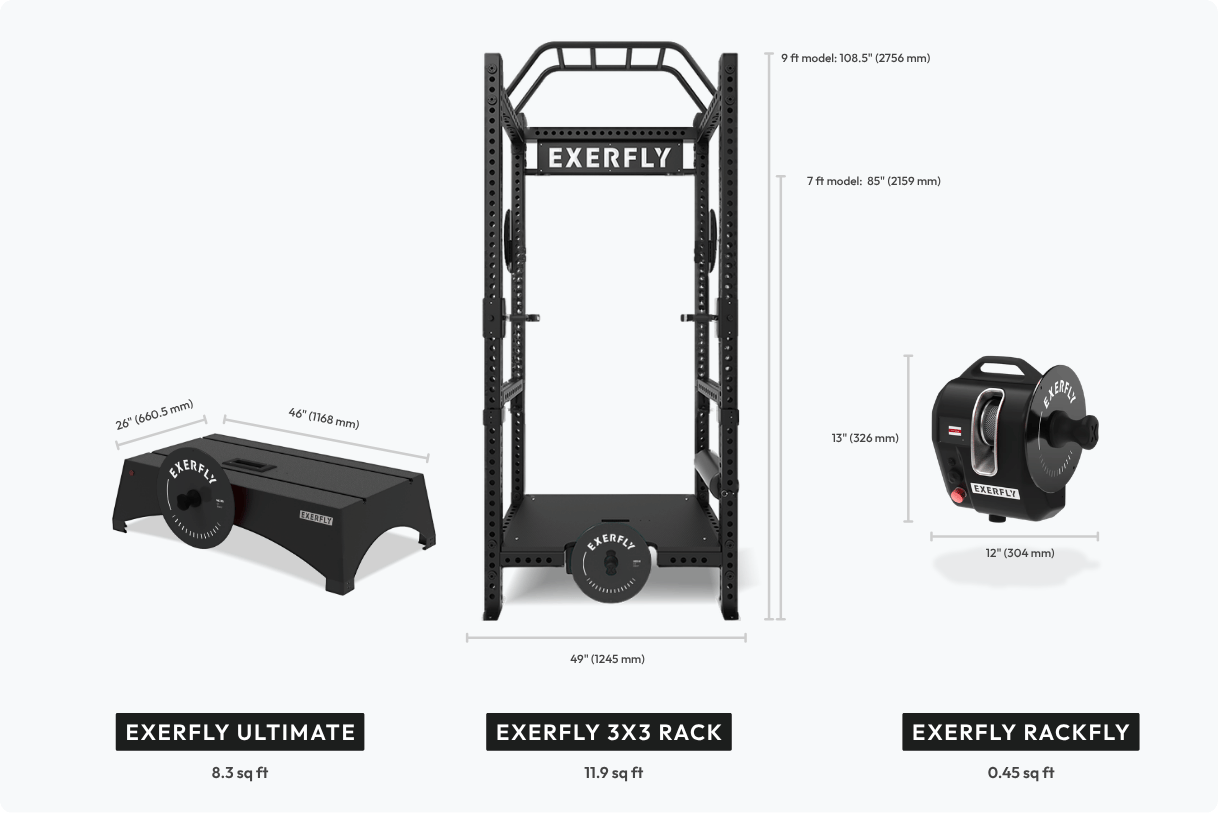
Flywheel devices offer a different equation. The Exerfly Ultimate, RackFly, or 3x3 Rack devices deliver high training density in a compact footprint, helping weight rooms support strength, power, speed, and rehab applications without taking up the floor space of multiple traditional stations.
How Does Flywheel Equipment Compare to Traditional Strength Machine Footprints?
To understand the space advantages, consider the equipment typically found in a weight room and the floor area each requires:
- Leg press machine: 35-50 square feet.
- Cable crossover station: 80-120 square feet.
- Belt squat machine: 25-40 square feet.
- Flywheel device: 4-12 square feet, depending on model and configuration.
This comparison becomes even more compelling when you factor in versatility. Traditional machines are often single-purpose, but a single Exerfly unit can replace multiple stations in a far smaller footprint while unlocking hundreds of exercise options across strength, power, speed, and rehabilitation training.
What Does Motorized Flywheel Technology Add?
Exerfly’s Motorized Flywheel Technology takes that versatility a step further by adding precise, progressive eccentric overload to the same compact footprint and across the same range of exercises and applications. Simply put, we've added even more ways to train strength, power, speed, and rehabilitation needs without increasing floor space.
How Does Flywheel Training Support Multiple Training Applications?
A flywheel zone supports a wide range of athletic qualities from strength development to rehabilitation applications all from one device.
Performance Training Applications
Flywheel training has been shown to significantly improve strength, power, rate of force development, change of direction abilities, deceleration abilities, and movement quality when compared to traditional methods. The user-defined resistance automatically matches effort, making it suitable for max-intent training across different ability levels (1,3).
Rehabilitation and Return-to-Training Protocols
For users managing injury or returning to play, flywheel devices enable controlled eccentric loading, one of the most potent stimuli for tendon, musculotendinous, fascial, and neural remodeling. Exerfly is the only flywheel offering motorized eccentric overload, allowing you to add up to 180% more resistance in the eccentric phase. Now coaches and clinicians can apply the powerful flywheel eccentric stimulus with precision, and progress it as little as 1% at a time, through every phase of rehab.
Results From a Return-to-Play Case Study Utilizing Exerfly Motorized Technology:
The improvements seen in just 8 weeks suggest motorized flywheel training can accelerate return-to-sport timelines and improve RTS readiness post-ACL reconstruction. Case Study with Stony Brook University →.
- CMJ jump height increased by 14%
- Squat 1RM increased by 39%
- Single leg jump height with injured leg increased by 58%
- CMJ braking force with injured leg increased by 46%
- Limb symmetry index of single leg jumps increased by 35%
Prehabilitation and Resilience
Flywheel training also serves users who are healthy but at elevated injury risk due to training loads, previous injury history, or biomechanical factors. Eccentric hamstring work, for example, has strong evidence for reducing hamstring strain rates when incorporated into regular programming (2).
What Layout Options Work for Small Weight Rooms?
If your facility has limited square footage, there are several flywheel layout strategies that expand training options without expanding the room.
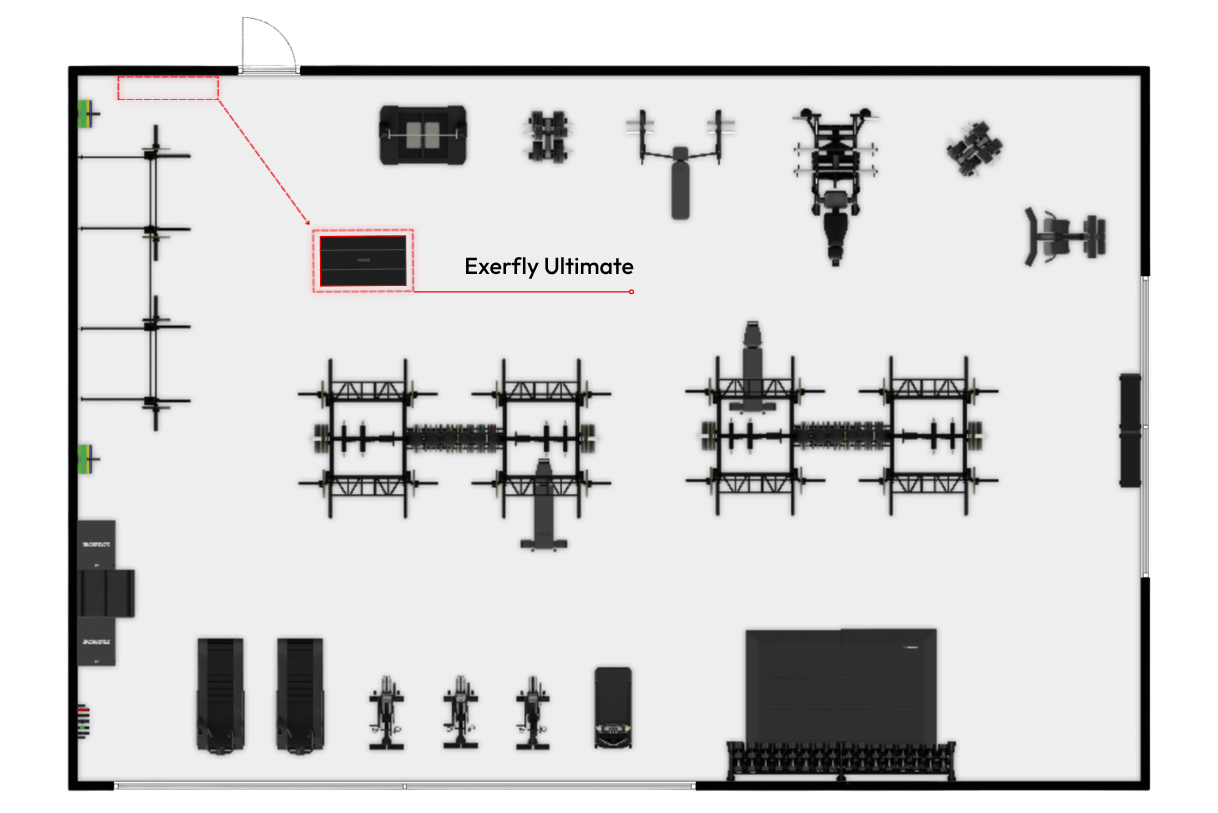
1. Corner Station Configuration
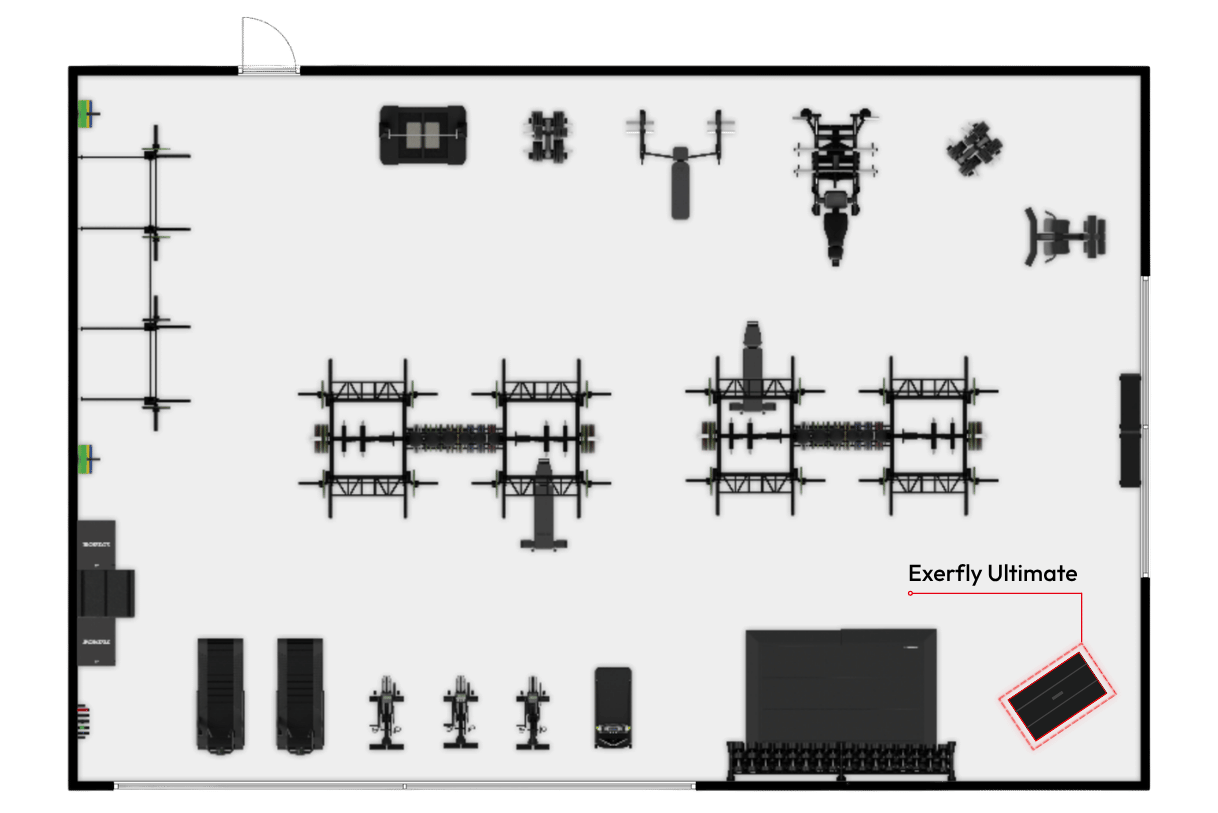
Place a platform flywheel device in an underused corner with clear sightlines to the main weight room floor.
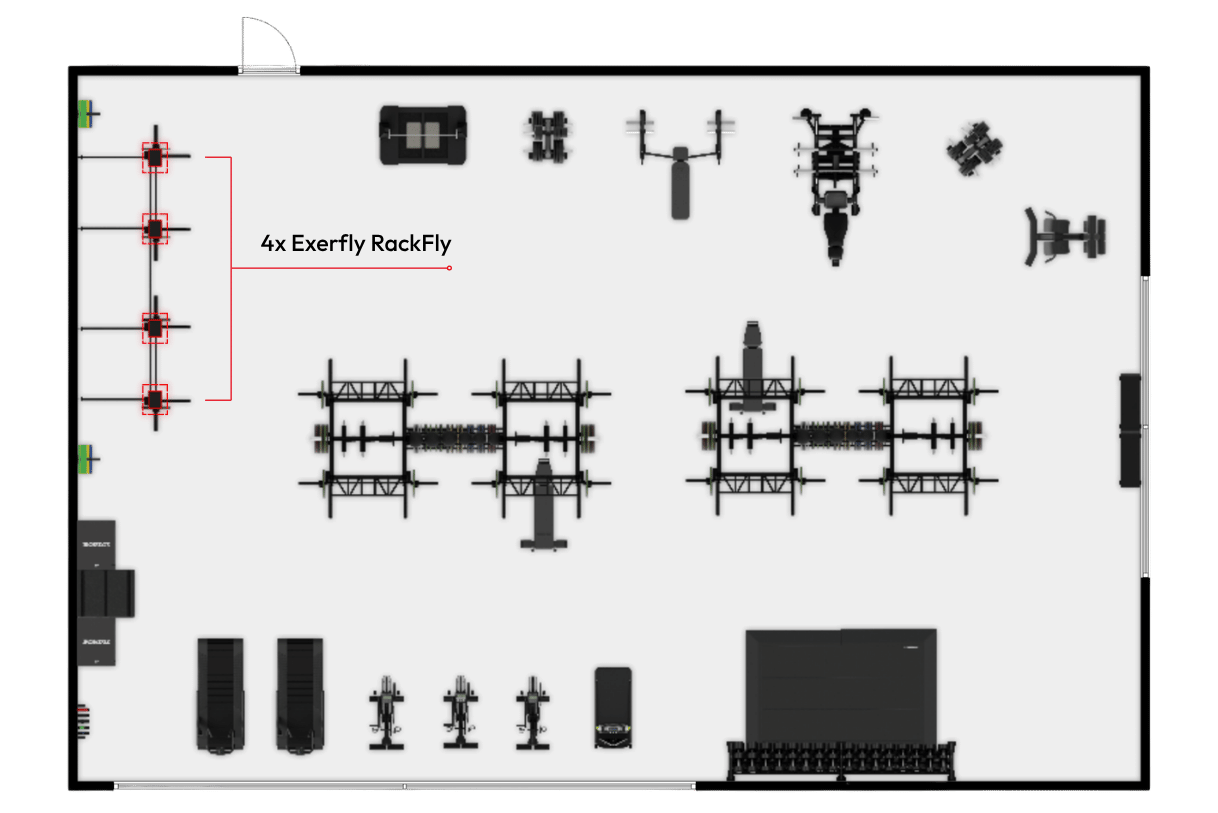
2. Rack Integration Approach
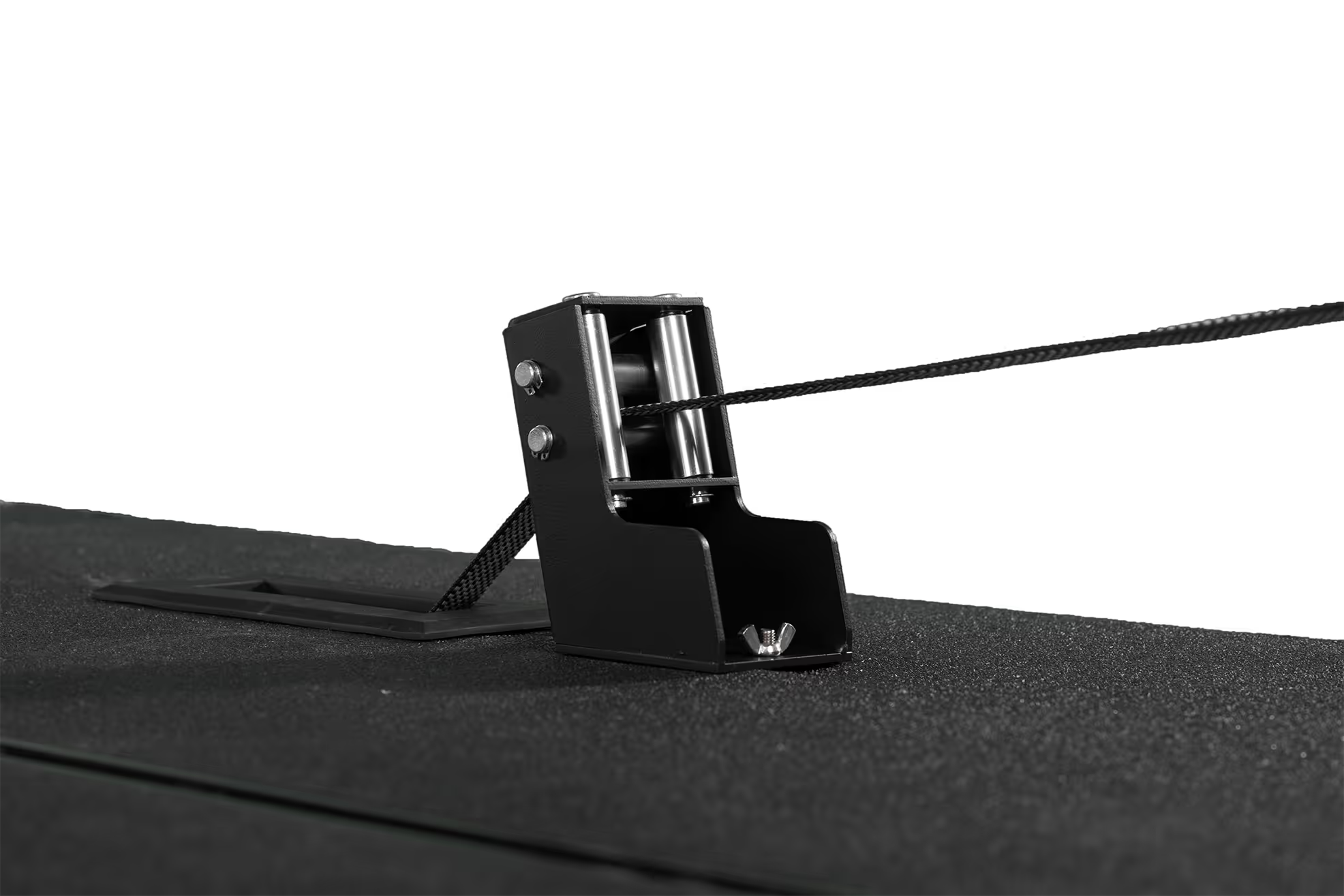
The Exerfly RackFly mounts directly to any standard upright or vertical structure, adding flywheel capability to existing infrastructure without consuming additional floor area. Its compact design and multiple mounting options mean you can take the Rackfly with you for outdoor training, or on the road.
3. Mobile Configuration
Exerfly Ultimate includes wheels for easy relocation. This allows you to store equipment against a wall or in storage when not in use and roll it into an open area during designated training blocks. Similarly, the RackFly is small enough and light enough to be easily relocated elsewhere when not in use. Mobile setups suit facilities that share space with testing, classes, or other activities.
4. 3x3 Rack Integration
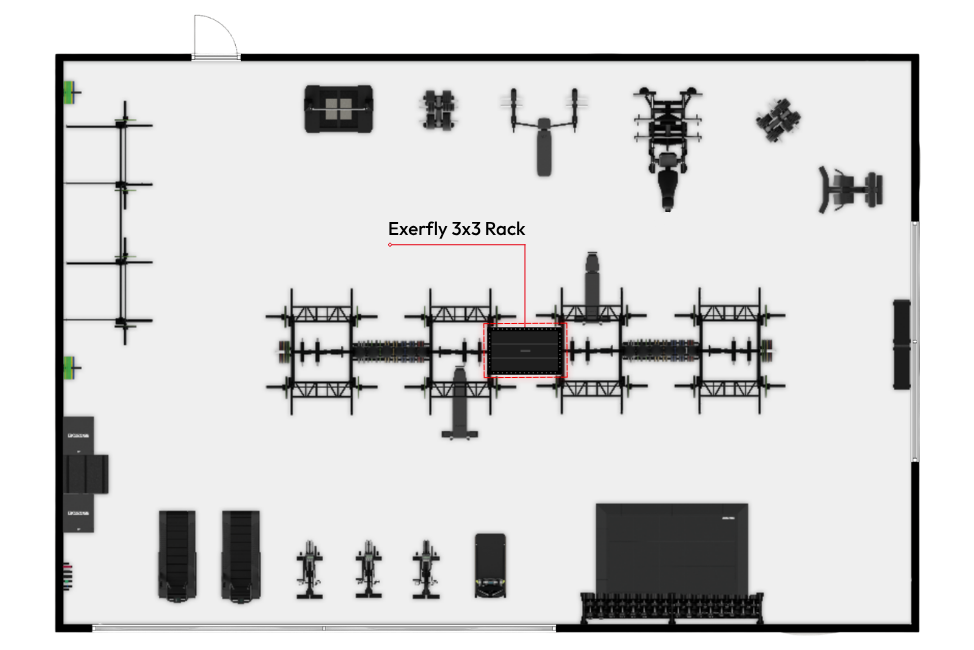
The Exerfly 3x3 Rack combines a traditional 3x3 upright rack with a flywheel base. Attach it to any existing 3x3 rig and use your current rack accessories to turn your dedicated rack space into a dual-function training zone. With an extensive range of compatible accessories, it's the most versatile flywheel system in the world.
Conclusion
Flywheel training equipment makes it possible to deliver high-impact training in a fraction of the floor space required by multiple traditional stations. This means more movement options, more programming variety, and more value from every square foot in the room.
In a crowded weight room, the ability to do more with less space isn't just convenient, it's a competitive advantage.
References
- Buonsenso, A, Centorbi, M, Iuliano, E, et al. A Systematic review of flywheel training effectiveness and application on sport specific performances. Sports 11: 76, 2023.
- De Hoyo, M, Pozzo, M, Sañudo, B, et al. Effects of a 10-week in-season eccentric-overload training program on muscle-injury prevention and performance in junior elite soccer players. Int J Sports Physiol Perform 10: 46–52, 2015.
- Raya-González, J, Prat-Luri, A, López-Valenciano, A, Sabido, R, Hernández-Davó, J. Effects of flywheel resistance training on sport actions. A Systematic Review and Meta-Analysis. J Hum Kinet 77: 191–204, 2021.




Lorem ipsum dolor sit amet, consectetur adipiscing elit. Suspendisse varius enim in eros elementum tristique. Duis cursus, mi quis viverra ornare, eros dolor interdum nulla, ut commodo diam libero vitae erat. Aenean faucibus nibh et justo cursus id rutrum lorem imperdiet. Nunc ut sem vitae risus tristique posuere.