





When it comes to flywheel squat training, one of the most common questions is: should you use a squat belt or a squat vest? The answer depends on your training goals, physical condition, and the demands of your sport or program. Understanding when to use each allows you to train smarter, adapt to your needs, and get more out of every session.
When to Use the Squat Belt
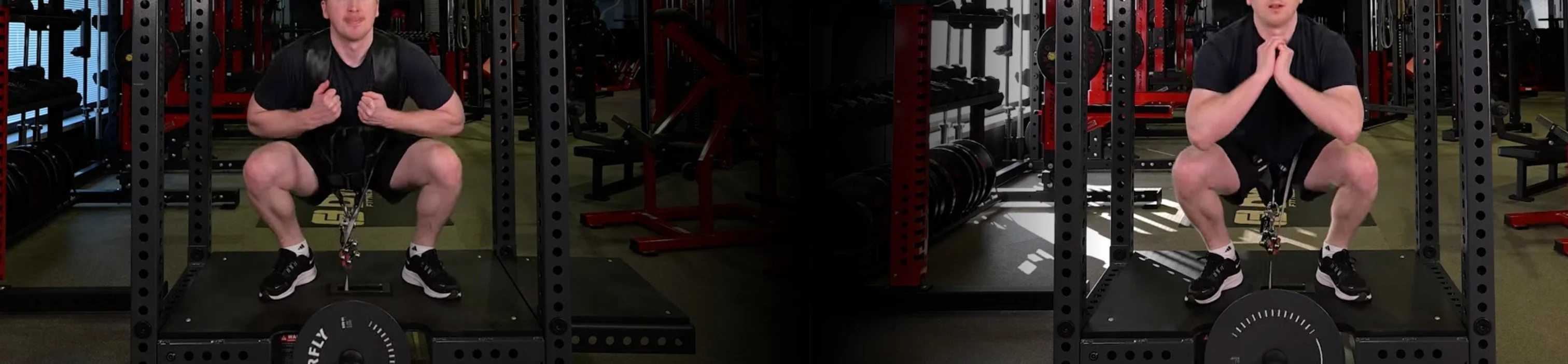
The Exerfly Squat Belt is designed to reduce, or completely eliminate, load on the upper body. By shifting resistance to the hips, it allows athletes to effectively train the lower body without placing a large amount of stress on the spine, shoulders, or upper limbs.
This makes it an ideal option for:
- Athletes managing back or shoulder injuries
- In-season athletes looking to maintain leg strength while minimizing fatigue or strain
- Anyone wanting to isolate lower-body work without upper-body involvement
If your priority is protecting the upper body while still driving lower-body strength, the squat belt is your go-to.
When to Use the Squat Vest
The Exerfly Squat Vest (formerly the squat harness) introduces full-body integration into your squat. By engaging the trunk and back, it allows for greater force production and higher power outputs.
For healthy athletes, this added involvement is a major advantage. Training with the vest can:
- Improve trunk stability and posterior chain engagement
- Increase mechanical output (force and power)
If your goal is performance development, the vest delivers a more complete and demanding training stimulus.
What Makes the Exerfly Squat Vest Stand Out?
The Exerfly Squat Vest is designed with:
- Increased fabric coverage for improved comfort and load distribution
- Greater structural support for heavy, high-output training
- A streamlined fit that prevents tangling
- Faster, easier on-and-off transitions
The result is a durable, comfortable, and athlete-friendly solution for high-performance flywheel training.
Which One Should You Choose?
Both accessories have their place. The squat belt is perfect for reducing upper-body load and focusing on lower-body strength, while the squat vest is built for maximizing performance through full-body engagement.
.webp)



Lorem ipsum dolor sit amet, consectetur adipiscing elit. Suspendisse varius enim in eros elementum tristique. Duis cursus, mi quis viverra ornare, eros dolor interdum nulla, ut commodo diam libero vitae erat. Aenean faucibus nibh et justo cursus id rutrum lorem imperdiet. Nunc ut sem vitae risus tristique posuere.